
How to Choose the Right Pot for Your Plant
ToolsLeafSpotHome participates in the Amazon Associates Program. We earn a commission on purchases made through our links at no extra cost to you.
Why Your Pot Choice Matters More Than You Think
The pot you choose for an indoor plant is not a cosmetic decision — it is a fundamental horticultural one. A pot that is too large traps moisture around the root ball, starving roots of the oxygen they need and creating the perfect conditions for root rot. A pot without drainage holes allows water to pool at the base, with the same catastrophic result. A pot that is too small constricts root growth, prevents nutrient uptake, and causes the plant to dry out so rapidly that consistent watering becomes almost impossible.
Beyond these functional concerns, pot material significantly influences how quickly the growing medium dries between waterings. Terracotta, for example, wicks moisture out of the soil through its porous walls — a property that is genuinely beneficial for succulents and cacti but potentially harmful for moisture-loving ferns. Understanding these relationships transforms pot selection from an aesthetic choice into a precision tool for plant health. According to the University of Minnesota Extension's houseplant guidance, proper pot selection is one of the three most impactful factors in indoor plant success.
Drainage: The Non-Negotiable Rule
Every plant pot used for a long-term planting needs at least one drainage hole. This is not a preference — it is a physiological requirement of almost every terrestrial plant species. When you water, excess water needs a path to escape; without it, water fills the air pockets in the potting mix, displacing the oxygen that roots absorb between waterings. Over time — typically within a few weeks — this oxygen-deprived, waterlogged environment kills the fine feeder roots first, then the structural root system, and eventually the entire plant.
Many decorative pots sold in home décor stores lack drainage holes. The best solution is to use these as cachepots: place a nursery pot with drainage holes inside the decorative one, and remove the inner pot to a sink when watering. Allow it to drain fully before returning it to the cachepot. Never pour gravel or pebbles in the bottom of a pot without drainage as a substitute — research from multiple horticultural institutions has demonstrated that this actually raises the water table inside the pot and worsens drainage rather than improving it.
The Royal Horticultural Society recommends always prioritising drainage over decorative appeal when choosing containers for living plants.
Pot Size Matters More Than You Think
The ideal pot for most houseplants is 1–2 inches larger in diameter than the plant's current root ball. This "Goldilocks zone" of pot sizing gives roots enough room to spread and access fresh nutrients while keeping the volume of moist soil manageable. In a too-large pot, roots cannot access water and nutrients from soil that is far from their current reach, but that soil stays wet for long periods — a recipe for fungal problems and root rot.
When upsizing, move incrementally: from a 4-inch pot to a 6-inch pot, then to an 8-inch pot, rather than jumping to a much larger container. Plants that have become severely rootbound — where roots are circling the inside of the pot or emerging from drainage holes in large masses — may need more urgent upsizing, but even then, a step of no more than 2–3 inches in diameter is appropriate.
Depth is equally important. Shallow-rooted plants like peperomia and most succulents thrive in wide, shallow pots that dry out quickly. Deep-rooted species like Sansevieria and large Dracaena varieties benefit from tall, narrow pots that accommodate their downward-growing root systems without excessive soil volume.
Material Guide: Terracotta vs. Ceramic vs. Plastic
Each pot material has a distinct moisture profile that directly affects how often you need to water and which plants it suits best.
**Terracotta** is unglazed fired clay that actively wicks moisture through its walls. This breathability is excellent for succulents, cacti, Mediterranean herbs, and any plant that is prone to root rot in consistently moist conditions. The trade-off is that terracotta pots require more frequent watering, especially in warm or low-humidity environments. They are also heavier than plastic and can crack in freezing temperatures.
**Glazed ceramic** pots retain moisture significantly longer than terracotta because the glaze seals the clay walls. This makes them well-suited to moisture-loving plants like peace lilies, ferns, and tropical aroids. They are available in a huge range of finishes and colours and are excellent for decorative displays. The main downsides are weight and fragility — ceramic chips and cracks more easily than plastic.
**Plastic** pots are lightweight, affordable, durable, and excellent moisture retainers. They are the workhorse of the horticultural industry for good reason: consistent moisture retention, easy cleaning, and near-indestructibility. Modern frosted or matte-finish plastic pots have become increasingly attractive, blurring the line between functional nursery pot and display container. For indoor plants that need consistent moisture — most tropicals — plastic is a highly practical and underrated choice.
Self-Watering Pots: When They Make Sense
Self-watering pots incorporate a sub-irrigation reservoir at the base, separated from the growing medium by a wick or membrane. As the soil at root level dries, it draws water up from the reservoir via capillary action, maintaining a consistently moist — but not waterlogged — root environment. The system reduces watering frequency dramatically, with many reservoirs lasting one to three weeks between refills.
Self-watering pots are genuinely excellent for certain situations. They shine for moisture-loving plants like tomatoes, peppers, herbs, and tropical foliage plants in busy households. They are also ideal for travel, eliminating the need for a plant-sitter during short holidays. Plants that are prone to inconsistent watering cycles — causing stress from alternate drought and flood — benefit enormously from the stable moisture environment self-watering systems provide.
However, self-watering pots are not universal solutions. Succulents, cacti, snake plants, and other drought-tolerant species should never be grown in self-watering containers, as the permanent moisture at the reservoir level creates exactly the wet conditions these plants cannot tolerate. For these species, the traditional pot-and-saucer approach with a well-draining mix is always preferable.
Best Pot Shapes for Different Plant Types
Pot shape influences both the aesthetic presentation of a plant and its growing conditions. Round, symmetrical pots are the most versatile and suit the vast majority of houseplants. However, specific plant types have preferences worth considering.
Trailing and vining plants — pothos, philodendron, string of pearls — look their best and grow most naturally in hanging baskets or tall pedestal pots that allow their stems to cascade freely. Standard nursery pots placed in macrame hangers are a cost-effective way to achieve this aesthetic. Wide, shallow dishes and trays are ideal for plants with spreading, shallow root systems: African violets, many succulents, and low-growing peperomias all perform well in containers that are wider than they are deep.
Long, rectangular window boxes suit trailing plants along a windowsill and are excellent for growing a row of herbs in the kitchen. Tall, narrow cylindrical pots complement architectural plants like Sansevieria, Strelitzia, and indoor palms, supporting both their upright growth habit and their deeper root systems. Orchid pots — clear plastic or slatted terracotta cylinders — allow roots to access light, which orchid roots require for photosynthesis, and provide the airflow that epiphytic orchid roots need to stay healthy.
Our Top Recommendations
After reviewing thousands of verified customer reviews and real-world horticultural performance data, our top picks for indoor plant pots combine practical drainage design with materials matched to common plant types.
For most indoor plant owners, a set of white ceramic pots with drainage holes and matching saucers represents the best balance of function and aesthetics. They retain moisture well for tropical houseplants, look clean and versatile in any interior, and the included saucer protects surfaces. The La Jolie Muse ceramic planter set (available in three graduated sizes) is our top recommendation in this category.
For those with large or fast-growing tropicals, fabric grow bags offer superior air-pruning performance that prevents root circling and promotes dense, fibrous root systems. The Gardenbasix matte black grow bags are our pick for plants that need frequent repotting or have aggressive root systems.
For the design-conscious collector, macrame hangers transform trailing plants into living artwork without requiring additional shelf space. The Mkono 3-Pack remains our top-rated option based on durability, adjustability, and aesthetic quality across thousands of verified purchases.
Related Products
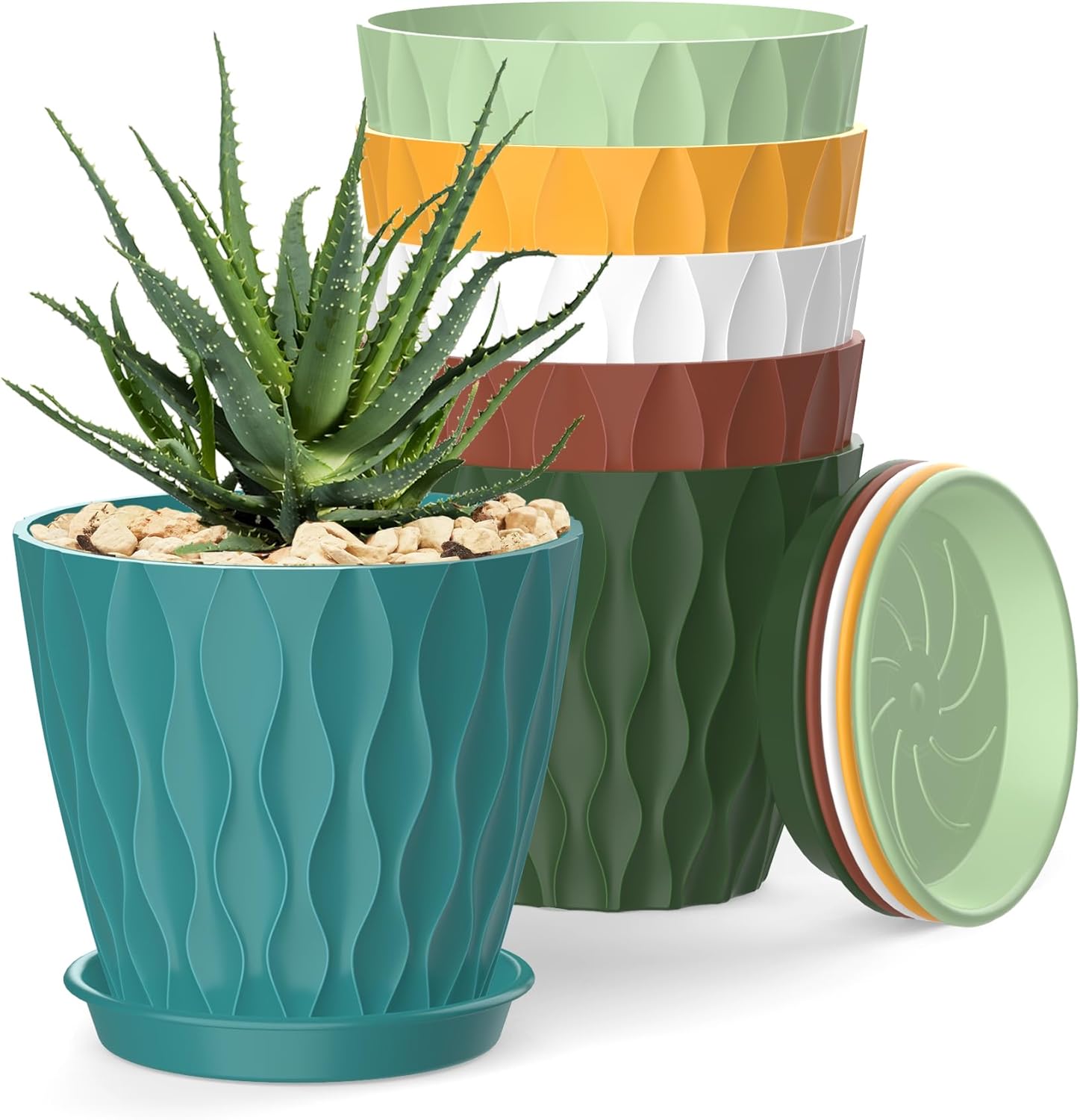
4 Inch Plant Pots, 6 Pack Indoor Flower Pots with Drainage Holes and Trays

Utopia Home Plant Pots Indoor with Drainage Holes – Set of 5 White Plastic Flower Pots

8/10/12 Inch Self Watering Pots for Indoor/Outdoor Plants – Large Plastic Planter
ToolsLeafSpotHome participates in the Amazon Associates Program. We earn a commission on purchases made through our links at no extra cost to you.